AmeriTrac provides track assessments, FRA inspections, loadout track management, construction management, and maintenance planning for mining and aggregate operations across the Lower 48 States.
Mining track carries more tonnage over less mileage than almost any other industrial application. A loadout may see several unit trains a week, every car loaded to capacity, moving at creep speed through the same few hundred feet of track. That concentration of load, combined with an environment full of abrasive fines, degrades track structure faster than anywhere else on an industrial property.
AmeriTrac works with mine and quarry operators to keep loadout and yard trackage in service. We assess condition, inspect to the Federal Railroad Administration Track Safety Standards, manage rehabilitation and construction, and build maintenance programs sized to the tonnage the track actually carries.
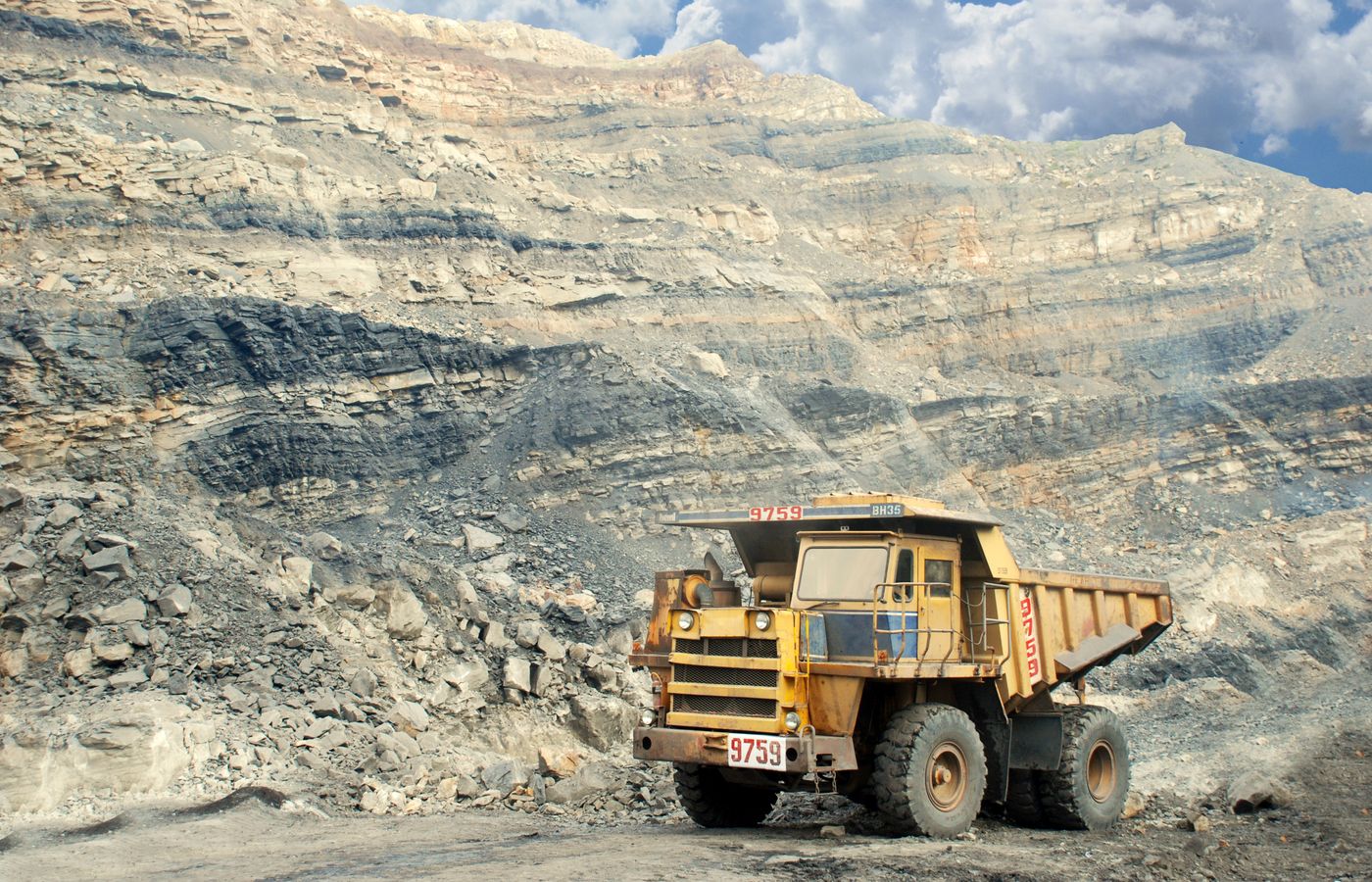
Heavy haul in a mining environment produces a distinct and fairly predictable set of failure modes:
The FRA Track Safety Standards at 49 CFR Part 213 set minimum requirements for gauge, alignment, surface, crossties, fastenings, joints, and turnouts by class of track and maximum speed. Mine trackage operates at Excepted or Class 1 speeds, but the tonnage it carries is anything but light duty.
Jurisdiction turns on the relationship to the general railroad system. Track a common carrier operates over is generally regulated. Track inside the property worked only by your own or a contract crew may not be. Where unit trains are pulled directly by the serving carrier, the carrier will be applying Part 213 to the track its crews and equipment occupy regardless of where the formal boundary sits.
For mining operations we treat Part 213 as the minimum rather than the target. On track carrying this tonnage, the standard defines the point at which track must be removed from service, not the condition at which a loadout should be operating. Maintenance planned to the condemning limit produces service interruptions at exactly the moment production is highest.
Mining engagements usually center on the loadout and the yard that feeds it:
Common findings at mining operations include ballast fouled with product fines to the point of holding water, pumping ties and loss of surface through the loadout, gauge face wear and head loss on curves, worn switch points and frogs on heavily used turnouts, deteriorated ties clustered where cars are spotted repeatedly, inadequate drainage in cuts and around the loadout structure, and rail approaching condemning limits on curves while tangent rail remains serviceable.
Ballast is usually the controlling item. Undercutting and renewal are more disruptive and more expensive than surfacing, so they get deferred, but surfacing over fouled ballast is temporary by definition. Establishing which segments genuinely need ballast renewal rather than another surfacing cycle is often the highest-value output of an assessment.
Mine track maintenance competes directly with shipping. Every hour the loadout is out of service is tonnage not moved, so work is deferred toward the low season and then compressed into a window that is never quite long enough.
Planning from condition data makes that tractable. Quantified defects, unit costs, and a clear sequence let ballast, tie, and surfacing work be phased across several seasons with the highest-consequence segments taken first, and let material be ordered ahead of long lead times rather than after a failure.
More frequently than the Part 213 minimum for its class. Inspection interval on heavy haul track should be set by tonnage and observed rate of change rather than by a calendar default. Where a loadout handles frequent unit trains, a substantially shorter cycle is normal and appropriate.
Spilled product and fines migrate into the ballast section and fill the voids that let it drain and distribute load. Once fouled, ballast holds water, and saturated ballast under heavy axle loads loses surface rapidly. Surfacing over fouled ballast restores geometry briefly; undercutting or renewal addresses the cause.
Yes. Gauge face wear and head loss are measured as part of an assessment and compared against wear limits, which lets rail relay be planned by curve rather than by segment. On heavy haul track, curves frequently reach condemning limits while adjacent tangent rail remains fully serviceable.
Yes. We provide project and construction management for loadout reconstruction, loop track, and storage expansion from planning through final acceptance, including phasing intended to keep some shipping capability available during construction wherever the layout allows.
Yes. AmeriTrac maintains registrations with ISNetworld, Avetta, and Veriforce, and participates in E-Verify, covering the prequalification most mining operators require before site access.
AmeriTrac works throughout the Lower 48 States. To discuss your operation, contact Phillip Jureczki on 281.830.1188 or at PJureczki@AmeriTrac.cc.