Setting up in-plant switching operations and holding third party switching contractors to a defined standard. Across the Lower 48 States.
Many facilities contract their in-plant switching to a third party, and it is usually a sound decision. The difficulty is that it also outsources the only rail operating expertise on site. When the contractor is the sole party who understands the operation, there is nobody in a position to judge whether it is being run safely or well.
AmeriTrac sets up in-plant switching operations and provides independent oversight of contracted switching. We define how the operation should run, verify that it does, and give the facility a technical position it can hold in the relationship.
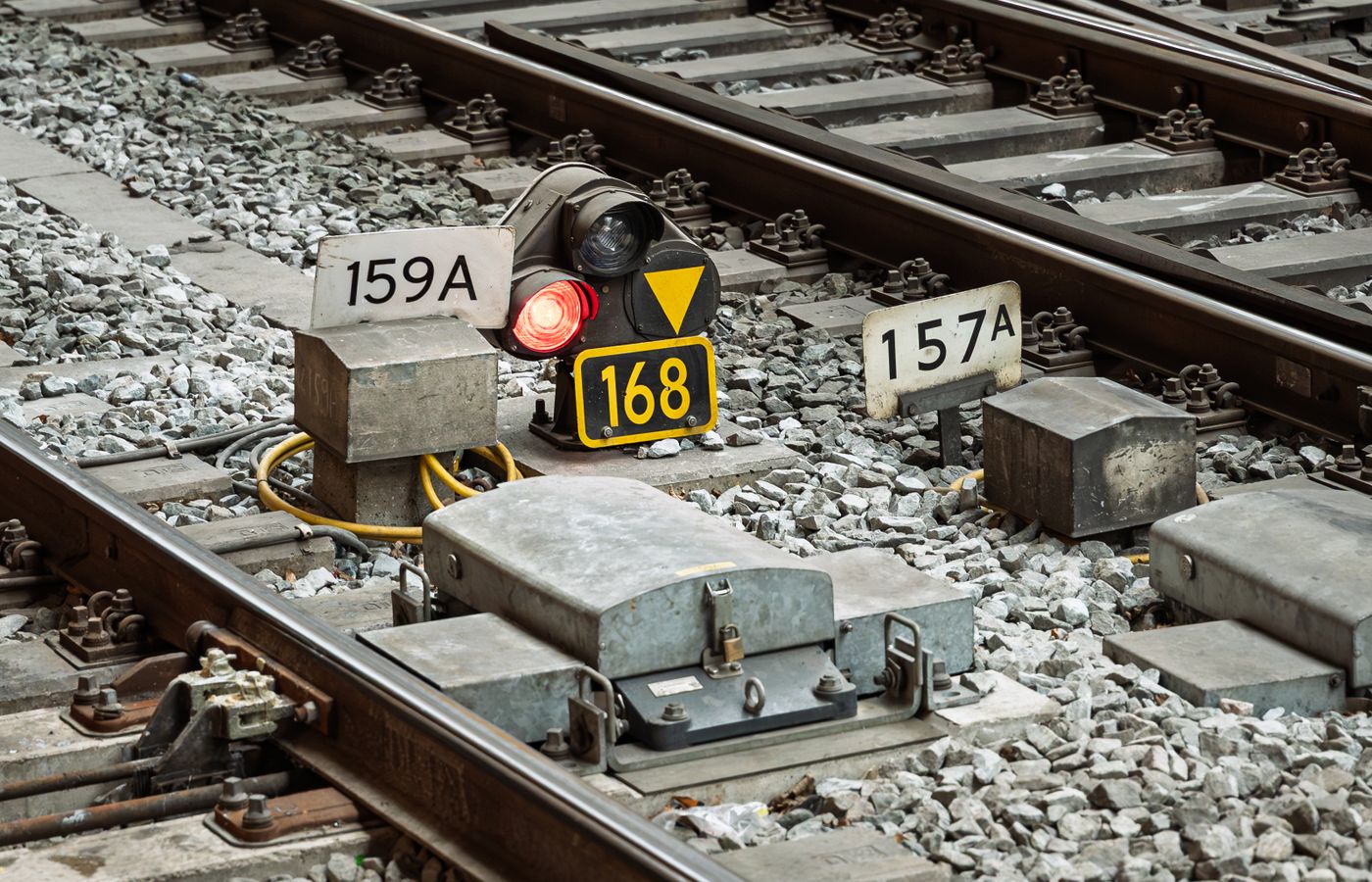
Facilities beginning in-plant switching, or bringing it back in house, need more than a locomotive and a crew. The operation needs defined limits, documented operating rules suited to the site, agreed interchange arrangements with the serving carrier, competence requirements for personnel, and physical protection in the form of derails, clearance markings, and signage.
Getting that established at the outset is far easier than retrofitting it onto an operation that has been running informally. Practice hardens quickly, and undocumented habits are difficult to unwind once everyone has been doing them for a year.
We work with facilities to define the operation, produce the documentation it needs, and verify that the physical protection actually matches how the track is used rather than how it was used when the derails were first placed.
Recurring findings include operating rules that exist on paper but not in practice, blue signal protection applied inconsistently or not at all, derails that are damaged, missing, or positioned for a track layout that has since changed, securement practice that relies on habit rather than a stated requirement, shoving movements made without adequate point protection, and interchange responsibility that neither party can point to in writing.
Derails deserve emphasis because they are cheap, they are the last physical defense against a car reaching a main line or a public crossing, and they are among the most frequently deficient items found on industrial property.
Independent oversight is not an adversarial arrangement. Good switching contractors generally welcome it, because it gives them a technically competent counterpart at the facility instead of a client who cannot distinguish good practice from bad and therefore prices only on rate.
What it changes is accountability. Performance is measured against a defined standard rather than against the absence of incidents, which is a poor measure because it only reports after the fact.
It is the requirement that workers on, under, or between rolling equipment are protected so the equipment cannot be moved while they are exposed, using a defined signal and controlled by the workers themselves. It is one of the most consistently mishandled requirements at industrial sites, and among the most serious when it fails.
Yes. That covers defining operating limits and rules suited to the site, agreeing interchange arrangements with the serving carrier, specifying competence requirements, and confirming physical protection such as derails, clearance points, and signage are correct for how the track will actually be used.
Reviewing the operation as run against a defined standard: rules and practice, protection, securement, derail discipline, and interchange handling. The output is a documented assessment and a clear position the facility can hold with its contractor.
As part of every track inspection, and reviewed whenever the track layout or operation changes. A derail positioned correctly for a layout that has since been altered provides no protection while appearing to, which is worse than none at all.
Yes. AmeriTrac maintains registrations with ISNetworld, Avetta, and Veriforce, and participates in E-Verify.
AmeriTrac works throughout the Lower 48 States. To discuss switching oversight, contact Phillip Jureczki on 281.830.1188 or at PJureczki@AmeriTrac.cc.