AmeriTrac provides track assessments, FRA inspections, construction management, and maintenance planning for port authorities, marine terminals, and stevedoring operations across the Lower 48 States.
Rail carries the heaviest and least time-critical cargo through a port, and it does so on some of the hardest-worked track in the country. On-dock and near-dock trackage moves loaded container cars, bulk hoppers, and breakbulk flats through salt air, standing water, constant rubber-tired traffic, and paved crossings that never get a quiet hour. A terminal cannot simply take a track out of service for a week, which is why small defects are so often left until they become large ones.
AmeriTrac works with ports and terminal operators to keep rail available and safe. We assess condition, inspect to the Federal Railroad Administration Track Safety Standards, manage rehabilitation and new construction, and build maintenance plans that fit around vessel calls and rail windows instead of fighting them.
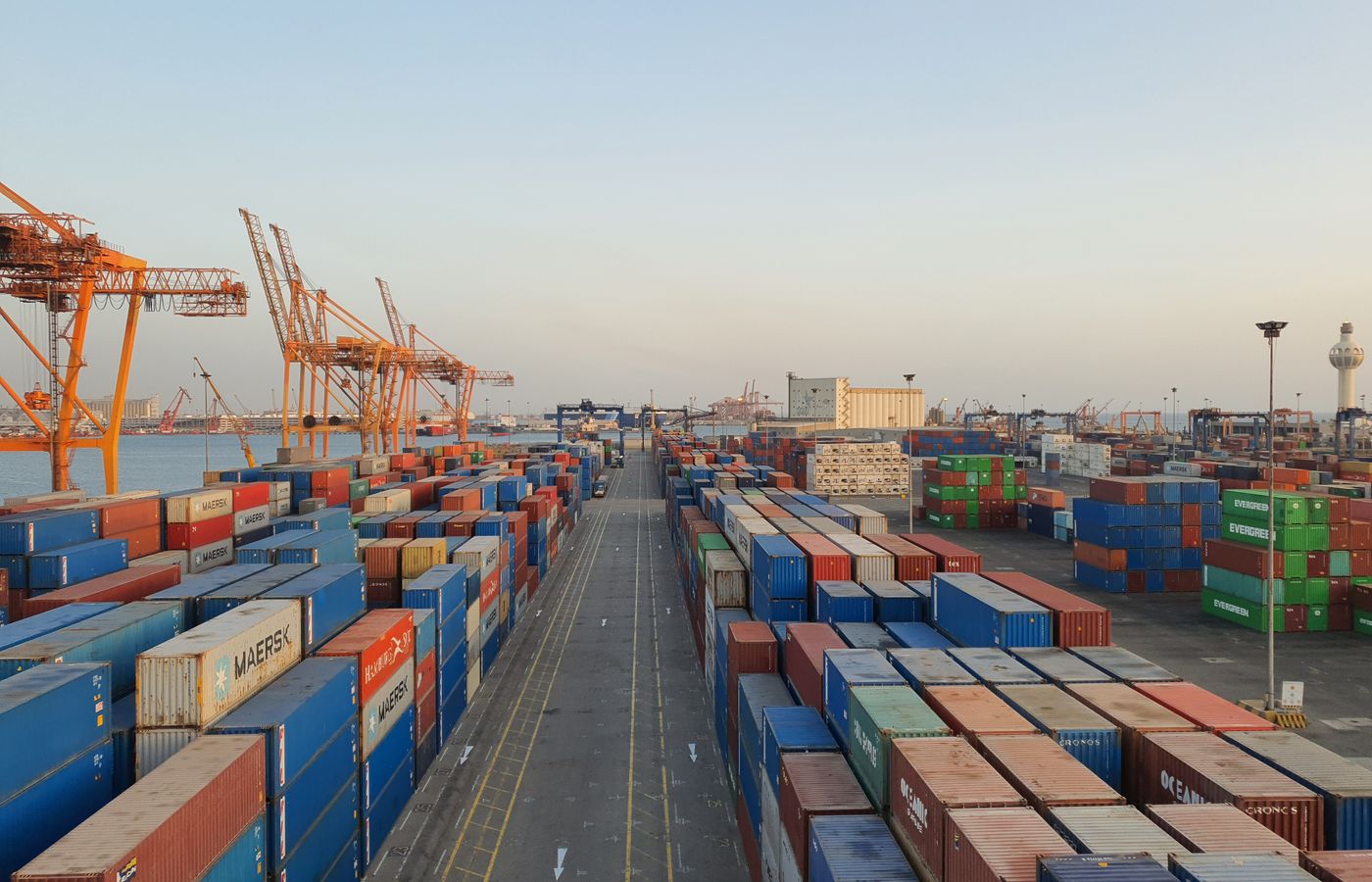
Track inside a marine terminal degrades in ways that inland industrial track does not, and the causes are specific to the environment:
The regulatory picture at a port is usually more layered than at a single industrial plant. Track where a common carrier operates is generally within FRA jurisdiction. Track worked only by a terminal operator behind the gate may not be. Some ports also operate their own switching railroad, which can itself be a common carrier, and that changes the analysis again.
The FRA Track Safety Standards at 49 CFR Part 213 set minimum requirements for gauge, alignment, surface, crossties, fastenings, joints, and turnouts by class of track and maximum speed. Terminal trackage almost always operates at Excepted or Class 1 speeds, the least demanding tier, but low speed is not the same as low consequence: a derailed loaded container car in a working terminal blocks far more than one track.
Our recommendation to port and terminal clients is to inspect to Part 213 across the whole facility regardless of where the jurisdictional line falls. It gives you one standard, one record format, and one defensible answer if a serving carrier, an insurer, or an investigator asks what your program was.
Terminal engagements typically begin with an assessment of the full trackage and develop into a recurring inspection and maintenance program:
Recurring findings on terminal track include corroded joint bars and fasteners, deteriorated ties concentrated at crossings and under embedded sections, fouled ballast that no longer drains, flangeways packed solid with debris, worn switch points and damaged frogs at high-traffic turnouts, broken pavement at crossings, gauge widening through curves, and derails or wheel stops that are missing, damaged, or no longer appropriate for the current operation.
Embedded track deserves particular attention because it conceals condition. Rail can be substantially corroded and ties fully deteriorated under a sound-looking concrete surface. Where embedded track carries loaded cars, we look for surface deviation, pumping at the pavement edge, and flangeway condition as the visible symptoms of what cannot be seen directly.
The constraint at a port is rarely money alone. It is access. Track that generates revenue every day is difficult to release for maintenance, so work gets deferred until it becomes an emergency repair at the worst possible moment.
A condition assessment turns that into a schedulable problem. Defects are quantified, priced, and ranked, then grouped into work packages that fit the outage windows the terminal actually has. That approach also produces the documentation ports need when competing for capital internally or applying for infrastructure grant funding.
It depends on who operates over it. Track used by a common carrier is generally within FRA jurisdiction. Track worked solely by terminal personnel behind the gate may fall outside it. Ports that run their own switching railroad can face a different answer again. Because the boundary is rarely clean and can change with an operating agreement, we recommend applying Part 213 across the facility as a single standard.
Corrosion becomes a primary defect mode rather than a secondary one. Joint bars, bolts, rail base, and tie plates need closer attention than an inland facility of the same age would require, and fastener condition should be checked on a shorter cycle. Corroded components frequently fail before the rail itself shows meaningful wear.
Not fully by visual means, which is exactly why it matters. We inspect what is visible, then read the indirect indicators: surface deviation under load, pumping at the pavement edge, flangeway condition, and drainage behavior. Where those signs suggest hidden deterioration, we recommend selective exposure rather than guessing at the condition underneath.
Yes, and it usually has to be. We build maintenance plans as discrete work packages sized to the windows a terminal can realistically give, rather than as one continuous program that assumes extended track outages the operation cannot afford.
Yes. AmeriTrac maintains registrations with ISNetworld, Avetta, and Veriforce, and participates in E-Verify. Most port authorities and terminal operators require prequalification through one of these platforms before site access is granted.
AmeriTrac works throughout the Lower 48 States. To discuss a specific terminal, contact Phillip Jureczki on 281.830.1188 or at PJureczki@AmeriTrac.cc.